A Designer's Look at Autism - Different, Not Less
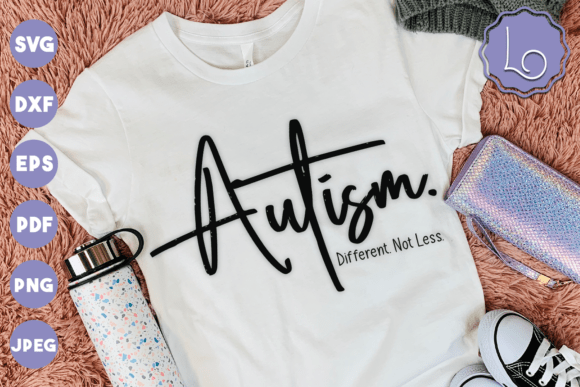
As someone who stitches designs for clients and my own shop every day, I approach every new file with a practical eye. I'm not just looking at the graphic; I'm imagining it stitched out on fabric, wondering how it will behave under the needle, and picturing the final product in a customer's hands. Today, that file is Autism - Different, Not Less SVG. Let's walk through what I see.
The Immediate Mood and Message
First impressions matter, especially for a design carrying a message like this. The core concept—"Different, Not Less"—is inherently powerful and positive. As a graphic, it leans toward a statement piece rather than a subtle accent. This isn't a tiny floral motif; it's a declaration. The mood it creates is one of supportive affirmation, awareness, and inclusivity. For embroidery, that translates into projects meant to be seen, read, and understood—items that wear their message proudly.
Where This Design Finds Its Natural Home
Thinking through my recent project queue, I can immediately picture several perfect applications. The clear, bold statement makes it a standout for custom apparel like sweatshirts and t-shirts, where the text can be rendered in a clean satin stitch. It would be equally compelling on a tote bag, a canvas for daily use that carries the message into the world.
I recently had a client request a meaningful gift for a teacher in a specialized classroom. An embroidered patch featuring this design, applied to a denim jacket or backpack, felt exactly right. The design also has a gentle strength that works wonderfully for baby clothes or nursery decor items like blanket corners or pillow covers—projects that speak to a family's love and acceptance from the earliest days.
For small business owners and Etsy sellers, this design fills a specific niche. It's perfect for creating holiday gifts that are deeply personal, or for building a line of small shop merchandise centered around support and awareness. It lends itself well to printable mockups for digital product sellers, showing potential buyers exactly the kind of heartfelt, handmade product they can create.
Navigating the Practical Stitching Considerations
Now, let's talk about the machine embroidery design itself. Any design with text requires a bit more attention during setup. The phrase "Different, Not Less" is concise, which is good—longer text can get tricky with tiny lettering.
My main advice here is to test on scrap fabric first. You need to check the stitch clarity, especially for the smaller letters. I'd run a sample on both a light and a dark fabric background to see how the thread color contrast holds up. A crisp white satin stitch on a black cotton, or a deep blue on a cream fleece, can make the message pop beautifully.
Consider your hoop size and final product dimensions. This isn't a miniature design you'd hide on a cuff. It deserves space. On a cap, for instance, you'd need to plan its placement carefully on the curved surface, perhaps simplifying the stitch types if the details become too dense for the fabric texture. For items like aprons or tea towels, where the fabric might be thinner or more textured, using the proper stabilizer is non-negotiable to keep the stitches sharp and prevent puckering.
Areas of potential challenge? If the design file has very small decorative accents or extremely tight corners, you might need to adjust stitch density or even choose a slightly larger size for the finished product to maintain clarity. Always inspect those small details in your software preview before committing to the final project.
How the Embroidery Elevates the Final Product
When this design is stitched well, its impact on the finished product is significant. The handmade presentation of embroidery adds a layer of care and craft to the message, increasing its perceived value as a personalized gift. For a creative entrepreneur, using it on your craft business items builds customer trust; it shows you're offering products with genuine meaning.
The professionalism of a clean, well-executed embroidery job turns a digital file into a tangible item of quality. It boosts giftability and recognition—people understand and connect with the message instantly. For commercial embroidery projects, like a run of sweatshirts for an advocacy group, it ensures brand consistency and a high level of buyer engagement with the product.
A Real Scenario: Preparing a Custom Tote
Imagine you're preparing a custom embroidered tote bag as a gift. You've chosen a sturdy canvas. You pull up the Autism - Different, Not Less SVG file. Your first step is a black and white mockup to check the layout. You decide on a centered placement, large enough to be readable from a few feet away. You select a thread palette—perhaps a spectrum of colors meaningful to the neurodiversity community. You stitch it out. The result isn't just a bag; it's a statement accessory that carries utility and advocacy together. That's the power of a well-applied embroidery design.
Essential Notes Before You Stitch or Sell
A few final, practical thoughts from the trenches. Always review stitch density for the fabric you're using. A dense fill stitch on a lightweight t-shirt might require a lighter setting to maintain fabric drape. Confirm the licensing terms of the digital embroidery file before using it for commercial projects or selling finished items. This is crucial for protecting your craft business.
Remember, the success of any embroidery project lies in the pairing of a good design file with thoughtful execution. Autism - Different, Not Less SVG provides a strong, meaningful foundation. Your job as the maker is to match it with the right fabric, the right thread, the right stabilizer, and the right intention. When you do, you create not just a craft, but a conversation.