A Designer's Look at 100 Days of Doing Teacher Stuff PNG
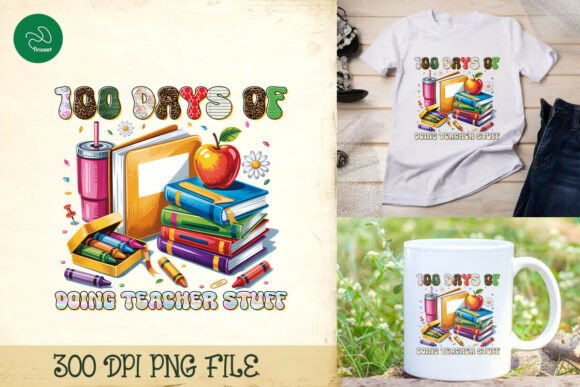
When a new embroidery design comes across my desk, I don’t just look at the preview image. I think about the finished stitch. I picture it on a real product, worn or used by a real person. That’s the lens I’m using today for 100 Days of Doing Teacher Stuff PNG. Let’s talk about where this design shines, where you might need to plan carefully, and how it can elevate your craft projects.
The Immediate Mood: Warm, Celebratory, and Clearly Professional
First impressions matter, both for you as a maker and for your eventual customer. This design has a celebratory, almost badge-like quality. The circular layout and central theme suggest accomplishment and pride. It doesn’t feel casual or whimsical; it feels professional and earned. This tells me it’s naturally suited for gifts of recognition, for commemorative items, or for products aimed at the educator community itself. The visual personality is clear and confident.
Where This Embroidery Design Naturally Belongs
My mind immediately goes to custom apparel meant as a thoughtful gift. An embroidered sweatshirt or tote bag for a teacher finishing a milestone. A pillow cover or tea towel for a teacher’s home. It would be a strong candidate for a personalized product in a small shop catering to schools or families. The design carries enough weight to feel substantial on a baby item like a blanket celebrating a teacher-parent, or on an apron as a boutique kitchen gift.
For commercial use, this could be a staple for an Etsy seller or craft fair vendor specializing in educator appreciation or school-themed merchandise. It would integrate well into a line of holiday gifts or end-of-year presents. As a digital embroidery file, it’s a solid design asset for creators building collections around professions or celebration.
Performance in Real Stitching Scenarios
Now, let’s get practical. How will this translate from screen to stitches?
On a stable, medium-weight fabric like a canvas tote or a cotton sweatshirt, I expect it to look crisp and clean. The likely use of satin stitches for borders and fill stitches for central elements should provide good coverage and a professional finish. On a dark fabric, you’ll need to be mindful of thread color contrast—opting for lighter, bright threads to ensure the design pops and retains its celebratory mood.
For something like an embroidered patch, it would work beautifully, offering a self-contained motif that could be applied to a cap or bag. On baby clothes or thinner fabrics, you’ll need to consider stitch density. A very dense design might cause puckering on a delicate knit; testing on scrap fabric is essential. The circular shape is generally forgiving on curved surfaces like caps, but always check the hoop size requirement to ensure it fits your project’s area.
Where to Exercise a Bit More Care
Every design has its sweet spots and its trickier applications. For 100 Days of Doing Teacher Stuff PNG, I’d pay close attention to any very small details or tiny lettering within the composition. These areas can get lost or become muddy if the scale is reduced too much for a small hoop. On textured fabrics like a thick towel or a blanket, the clarity of fine lines might soften, so a slightly larger size might be better.
Layered garments with stretch, like certain sweatshirts, require the right stabilizer to keep the circular shape from distorting. And for products destined for frequent washing, like kitchen towels or aprons, ensuring a robust stitch structure will maintain the design’s integrity and your product’s value over time.
The Impact on Your Product and Your Customer
Using a design like this isn’t just about the technical stitch; it’s about the story it tells on the finished product.
It adds visual appeal through a recognizable and positive theme. This directly boosts product value and giftability. A customer buying a “100 Days” embroidered item isn’t just buying decor; they’re buying a symbol of appreciation. That builds customer trust and engagement with your brand if you’re a maker.
The handmade presentation gains a layer of meaning. For a craft business, it can enhance brand consistency if you specialize in celebratory or niche professional items. It looks professional, which reflects back on you as the creator.
Practical Designer Notes Before You Hoop Up
- Always test the design on scrap fabric first, especially if working with an unfamiliar material like stretchy knit or dark denim.
- Check thread color contrast against your background fabric. Do a mental run-through: will the intended colors achieve the warm, clear mood the design promises?
- Review stitch density in the file preview if possible. A very dense fill might require adjustments for lightweight projects.
- Confirm the hoop size needed and compare it to your project’s available space. A circular design needs room to breathe.
- Inspect small details by looking closely at the digital file. Are there any intricate corners or fine lines that might need special attention during stitching?
- Consider testing it in black and white mockups to judge its form independently of color.
- Compare light and dark fabric backgrounds in your planning. The design’s impact will change with the backdrop.
- Use proper stabilizer for your specific fabric. This is non-negotiable for a clean result.
- Most importantly, check whether the design works for both personal and commercial projects according to its license. Confirm licensing before selling finished items or digital products. This protects your business and respects the designer’s work.
Ultimately, 100 Days of Doing Teacher Stuff PNG strikes me as a design with a clear purpose and strong visual character. It’s not a generic graphic; it’s a focused celebration. In the right project—a gift, a commemorative item, a boutique product for educators—it will stitch up into something meaningful and professional. Approach it with a practical eye for fabric and scale, and it can become a reliable and appealing part of your embroidery repertoire.