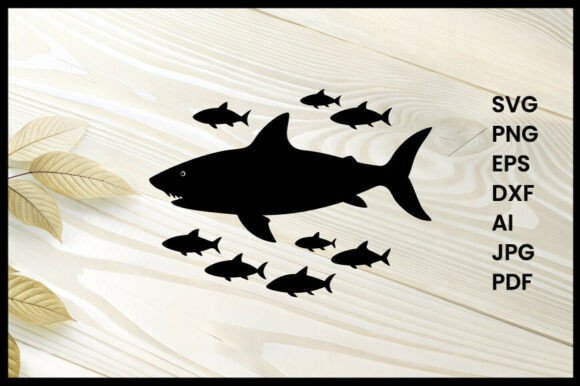
Silhouette Designs: Shark Hunting Fish Embroidery
When an embroidery file arrives labeled simply as a vector graphic, my first step as a designer is to visualize its journey from screen to stitch. The Shark Hunting School of Fish Silhouette presents a distinct, graphic moment. This isn't a detailed, anatomical shark. It's a stark, powerful silhouette of a predator encircled by a scattering of smaller fish, all set against that clean white background. The mood is dramatic, a bit primal, and undeniably cool. It feels modern, graphic, and lends itself perfectly to projects where bold, unambiguous imagery is key.
The Immediate Appeal for Crafters and Shops
The strength of this design lies in its clarity. As an embroidery design, those clean, closed shapes translate beautifully into stitch. There are no tiny, fussy details to get lost; the shapes are solid and defined. This makes it an incredibly versatile asset for a craft business. I can immediately picture it on a heavyweight cotton tote bag—that graphic black silhouette standing out against natural canvas would look sharp and professional. For an Etsy seller focusing on men’s apparel, it would be a strong contender for a left chest embroidery on a dark sweatshirt, using a white thread to invert the design for a striking effect.
It also carries a certain timeless, nautical vibe that isn't tied to a specific season. This is a bonus for small shop owners who need merchandise that sells year-round. Whether it’s a patch on a denim jacket, a centered design on a tea towel for a kitchen gift set, or a subtle piece on a baby’s nursery blanket (for the adventurous new parents), the theme is universally recognizable and stylized enough to avoid being childish.
Navigating Real Embroidery Situations
Let’s talk practical application. I’m imagining preparing a custom order for a client who wants this on a black cotton cap. The silhouette design is a friend here. Its continuous outlines mean satin stitches or fill stitches can cover the areas cleanly without a lot of jumping or complex pathing. However, the ‘school of fish’ element—those smaller silhouettes—requires attention. On a curved surface like a cap, especially if they are very small, their clarity could diminish if the hoop size is too limited or the stabilizer isn’t robust enough. For a cap, I might consider simplifying the group slightly or ensuring the machine embroidery file is digitized with a stitch density that holds up on textured fabric.
For apparel like t-shirts or lighter sweatshirts, the large, solid areas of the main shark silhouette are perfect. They provide visual weight and make the product feel valuable. But on stretchy or thin fabrics, that same solid area could become too dense, leading to stiffness or potential puckering. This is where testing on scrap fabric is non-negotiable. You need to check how the fill stitch behaves, whether the edges remain crisp, and if the overall design retains its graphic integrity after washing.
Where This Design Shines and Where to Be Cautious
This shark design excels on stable, medium-to-heavy weight fabrics where its graphic nature can be fully expressed. Think:
- Tote bags and aprons: Perfect for a handmade, boutique product.
- Pillow covers: Creates a modern, statement home decor piece.
- Patches: As a standalone embroidered patch, it’s instantly recognizable and easy to apply.
- Kitchen towels or blanket borders: For a personalized gift with a touch of personality.
Exercise more caution with:
- Very small hoop sizes: Those smaller fish might merge into a blob if scaled down too much.
- Highly textured fabrics like terry cloth: The silhouette’s clean edges could get lost.
- Dark fabric backgrounds if using the default black design: You’ll need to plan thread color contrast carefully, possibly flipping to a light thread or adding a background applique.
- Items requiring frequent, harsh washing: Large, dense stitch areas can wear faster; a running stitch outline version might be more durable for things like work aprons.
Impact on Your Business and Customer Perception
From a commercial embroidery perspective, this isn't just a craft graphic; it’s a brand asset. Used consistently—say, on all your packaging tote bags or as a logo element on staff aprons—it builds a cohesive, professional identity. For a digital product seller, this file, when presented in clean printable mockups, shows potential buyers exactly what they’re getting: a strong, usable design.
The design’s giftability is high. It’s not overly sentimental, but it’s interesting and stylish. A custom embroidered pillow cover with this design feels like a thoughtful, modern gift, more so than a generic pattern. For customer engagement, it’s a conversation starter. It’s specific enough to attract people who love marine themes, graphic art, or just want something that isn’t florals or script.
Practical Designer Notes Before You Hoop It
Before you run this Shark Hunting School of Fish Silhouette on a final product, make it a habit to run through this checklist:
- Always test on a scrap of your intended fabric first. This tells you everything about stitch density, tension, and overall look.
- Plan your thread colors. The design implies black, but on a black garment, consider white or a contrasting color to maintain the silhouette effect.
- Check the scale. How small can the smaller fish silhouettes go before they lose definition? Find that minimum size for your project.
- Evaluate it in both black and white digital mockups. See how it looks inverted. This might open up more application ideas.
- Use the correct stabilizer for your fabric type. This is critical for preserving those crisp edges.
- Confirm the licensing terms of the graphics file. If you’re selling finished products or commercial embroidery projects, ensure your use is permitted.
- Think about the end product’s care. For a baby item or something that will be laundered often, consider a lighter stitch density version if available.
Ultimately, the Shark Hunting School of Fish Silhouette is a robust, graphic embroidery design that offers a lot of creative utility. It’s not a delicate floral; it’s a statement. With proper setup and an understanding of its strengths—those bold, closed shapes—it can become a standout element in your handmade product line, a reliable choice for personalized gifts, and a trustworthy asset for your craft business. It asks for a bit of forethought regarding scale and fabric, but rewards you with a clean, professional, and engaging finished product.